
Together we can make a difference
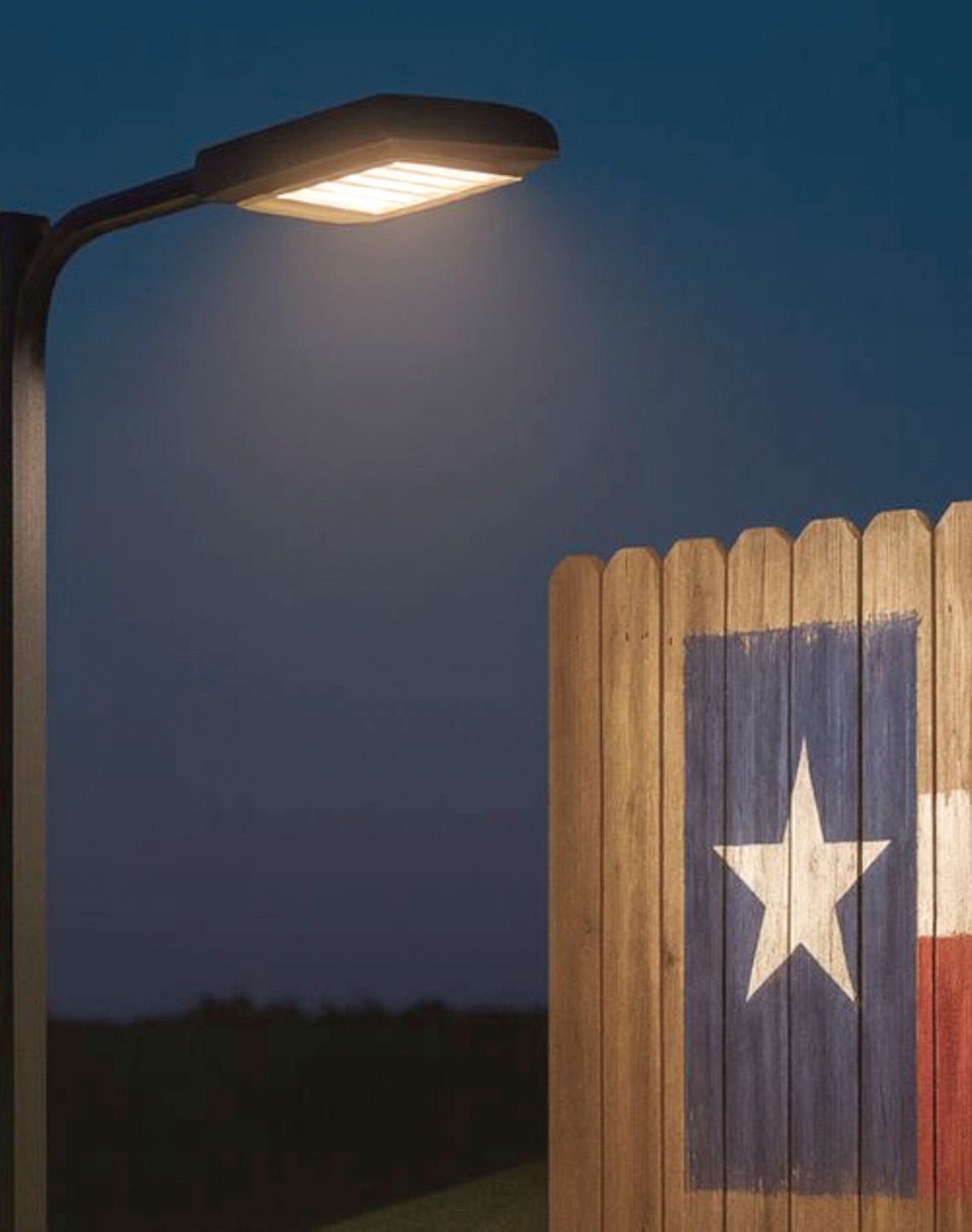
My introduction to responsible lighting practices came about three months after I’d closed on my first house. Perplexed by my too-high electric bill, I dug into the itemized charges and learned I was paying for a floodlight affixed to the telephone pole just beyond my fenceline. The former owner had asked the power company to install it for reasons I could only guess, but when I realized I was paying a small fortune to broadcast the bat signal from my backyard, I cancelled it. The light came down, and my budget (and my neighbors!) were much happier.
At the time, I didn’t realize that excessive lighting was more than merely annoying; it was bad. It would be another 10 years until I wandered into a lecture in a state park in the badlands of Montana and learned about light pollution. Here’s what light pollution is, how DarkSky Texas is helping to reduce it and how you can be part of the “one lightbulb at a time” solution.
DARKSKY TEXAS
I spoke with Soll Sussman, Board Member at DarkSky Texas, the Texas chapter of DarkSky International (formerly the International Dark-Sky Association), about responsible lighting practices and how small steps we take at home can significantly reduce light pollution. “We’re not trying to tell people not to use lighting, but to use it responsibly,” explained Sussman.
WHAT IS LIGHT POLLUTION?
Light pollution occurs when excessive artificial lighting disrupts natural darkness and alters ecosystems. When I was a little girl, I used to watch the stars from my backyard in suburban Texas. While traveling through Montana, I noticed that the stars in the night sky looked like those of my childhood, bright and sparkling. I realized that the stars hadn’t changed; the light creeping in from the growing city was hiding them.
You might think adjusting your porch light won’t make much difference, but what if everyone paid more attention to responsible lighting practices?
How much of a difference would that make in our view of the stars?
THE FIVE PRINCIPLES OF RESPONSIBLE OUTDOOR LIGHTING
My dazzling backyard orb of light is an extreme example of what not to do, but there are five simple principles for using outdoor lighting more responsibly, and no, it’s not about not using lights or trying to spread the message that lights are bad.
n Use light only if it is needed.
n All lights should have a clear purpose.
n Direct lighting to fall only where needed.
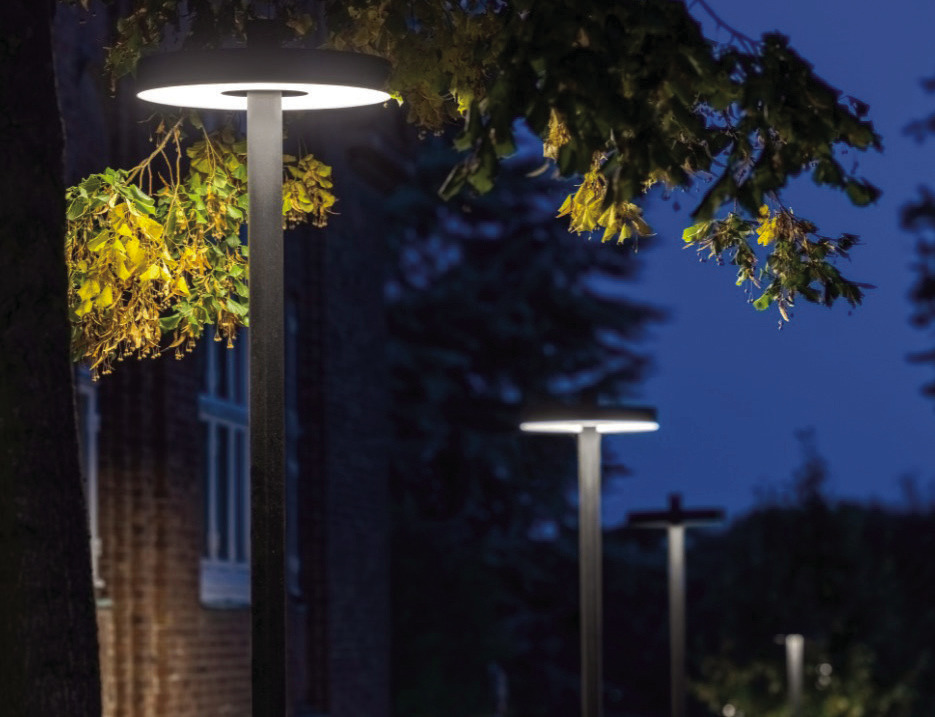
n Use shielding and careful aiming of the light beam so it points downward and doesn’t spill beyond where it is needed.
n Light should be no brighter than necessary.
n
Use the lowest light level required. Be mindful of surface conditions; some surfaces may reflect more light into the night sky than intended.
n Use light only when it is needed.
n Use controls such as timers or motion detectors to ensure light is available when needed, dimmed when possible, and turned off when not.
n
Use warmer color lights when possible.
n Limit shorter wavelength (blue-violet) light to the least amount needed.
Sussman adds that covered lighting and recessed lighting are less intrusive. “Ideally, you would never have a bare bulb.”
RESPONSIBLE OUTDOOR LIGHTING PRACTICES
There’s a myth that lighting equals security and that brighter lights mean more safety. Sussman points out that bright lights may light the way or illuminate something that might attract a burglar’s attention, such as a backyard spotlight shining on a garden shed. Something like this may spark unwanted attention, as in, “Ooh, this must be where the expensive tools are!” Bright light can also create contrasting shadows that make it easy to hide.
Responsible lighting practices include reducing the wattage of your light bulbs and using timers or sensors during the night. Do you really need your porch lights to shine constantly when you can set up a motion-activated sensor for your front door?
HOW LIGHTING CAN NEGATIVELY AFFECT NATURE
Bright lights can harm birds by causing collisions. The National Audubon Society has an initiative during the spring and fall migration season, encouraging people to turn off exterior lights from 11 p.m. to 6 a.m. to help prevent birds from colliding with windows. Sussman adds that this is an easy initiative we can take year-round.
Bright artificial light can also hinder the growth of garden plants, affect mating practices, and disrupt predator-prey relationships. Too-bright exterior lights outside your bedroom can suppress melatonin production, disrupting sleep.
HOW TO GET INVOLVED
DarkSky International offers both monthly and annual memberships. Texas members will be placed in the DarkSky Texas Chapter and receive info on local events. Individuals can also make direct donations. Information on membership and the handy ‘donate’ button are on the DarkSky International and DarkSky Texas websites.
DARKSKY CERTIFIED LOCATIONS IN TEXAS
One of the best ways to become motivated to adopt more responsible lighting practices is to appreciate the unpolluted night sky with your eyes. There are currently 24 officially designated dark sky places in Texas listed on DarkSky Texas’ website. There are many parks and natural areas, such as Big Bend National Park and Enchanted Rock State Natural Area, but some are cities, such as Bee Cave and Dripping Springs. Most Texas-certified dark sky locations are in Central and West Texas.
ABOUT THE WRITER Jill Robbins is an award-winning writer whose work has appeared in Fodor’s Travel, SUCCESS Magazine, Saturday Evening Post, and more. Jill served 26 years in the Air Force, which sparked her love of travel. She has visited 39 countries and 44 U.S. states and has lived in England, Germany, and the Azores. She is an active member of the Society of American Travel Writers, the North American Travel Journalists Association, and the Texas Auto Writers Association. Jill lives in the San Antonio area with her husband and two teenage sons, but she is usually somewhere else.


Comment
Comments